
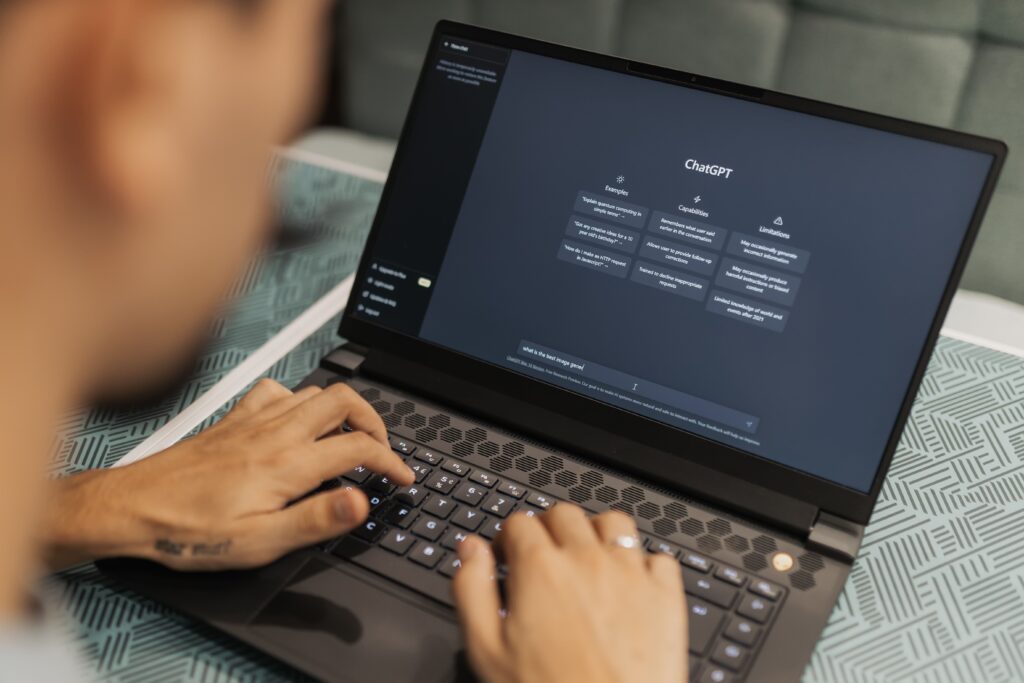
Many employees are using AI tools without approval, creating Shadow AI risks that expose organizations to data leaks, compliance violations, and cybersecurity threats. Learn how to identify and manage Shadow AI safely.
When organizations think about cybersecurity threats, external attackers often receive the most attention. Significant investments are made in firewalls, endpoint protection, phishing awareness training, email security, and threat detection technologies. While these measures are critical, they may not address one of the fastest-growing threats facing businesses today: Shadow AI.
Unlike traditional cyber threats that originate outside the organization, Shadow AI often begins with well-intentioned employees who are simply trying to work more efficiently. Staff members are increasingly turning to artificial intelligence tools to write emails, summarize reports, generate content, analyze data, transcribe meetings, and automate repetitive tasks.
While these tools can deliver significant productivity benefits, their use outside approved governance frameworks can expose organizations to substantial security, compliance, privacy, and operational risks.
The question is no longer whether employees are using AI. The question is whether your organization knows where, how, and why it is being used.
What Is Shadow AI?
Shadow AI refers to the use of artificial intelligence applications, services, or tools without the knowledge, approval, or governance of an organization’s IT, security, compliance, or risk management teams.
Similar to the concept of Shadow IT, Shadow AI occurs when employees independently adopt technology solutions to solve business challenges without following established organizational processes.
Examples of Shadow AI include the use of:
- ChatGPT
- Claude
- Google Gemini
- AI-powered browser extensions
- AI transcription services
- AI meeting assistants
- AI content generation tools
- AI coding assistants
- AI-powered research platforms
- AI document and proposal generators
In many cases, employees are not intentionally bypassing security policies. Instead, they are leveraging accessible technology to improve efficiency and productivity.
Unfortunately, productivity gains can sometimes come at the expense of organizational security.
Why Shadow AI Is Growing So Quickly
The rapid adoption of generative AI has created one of the most significant workplace technology shifts in decades.
Employees are increasingly expected to accomplish more with fewer resources while maintaining high levels of productivity. AI tools can dramatically reduce the time required for tasks such as:
- Drafting emails
- Creating reports
- Summarizing meetings
- Conducting research
- Analyzing data
- Generating presentations
- Building proposals
- Developing marketing content
When official AI solutions are unavailable or approval processes move too slowly, employees often seek their own alternatives.
This creates an environment where Shadow AI can spread rapidly throughout an organization without leadership even realizing it.
Why Employees Use Shadow AI
Most Shadow AI usage is not driven by malicious intent.
Employees commonly adopt unauthorized AI tools because:
- They need answers immediately
- They want to reduce repetitive work
- Formal processes feel inefficient
- Approved AI tools are unavailable
- They are experimenting with new technologies
- They are trying to improve productivity
- They see colleagues successfully using AI
In many cases, employees believe they are helping the organization by working smarter and faster.
However, even well-intentioned actions can introduce significant risks when security and governance controls are absent.
The Biggest Shadow AI Risks Organizations Face
-
Data Leakage and Sensitive Information Exposure
One of the most common Shadow AI risks involves the accidental disclosure of sensitive information.
Employees may upload confidential data to AI services without understanding how that information is stored, processed, or retained.
Examples of sensitive information frequently shared with AI tools include:
- Customer information
- Financial records
- Employee data
- Student records
- Healthcare information
- Contract details
- Strategic plans
- Intellectual property
- Product roadmaps
- Source code
Once that information leaves approved systems, organizations may lose visibility and control over where it resides and how it may be utilized.
This makes Shadow AI a potentially significant cybersecurity concern.
-
Compliance and Regulatory Risks
Organizations operating in regulated environments face additional challenges when employees use unauthorized AI solutions.
Compliance requirements often govern how information must be handled, stored, processed, and protected.
Shadow AI may create risks related to:
- Privacy legislation
- Industry-specific regulations
- Records retention requirements
- Data residency obligations
- Client confidentiality agreements
- Contractual security commitments
Without appropriate oversight, organizations may unknowingly create compliance gaps that only become apparent during audits, investigations, or security incidents.
-
Unauthorized Access to Business Systems
Many AI-powered applications request extensive permissions before they can function effectively.
Employees may unknowingly authorize AI tools to access:
- Email accounts
- Calendars
- Cloud storage platforms
- Team collaboration tools
- Shared drives
- Productivity suites
- Internal knowledge bases
- Customer data repositories
In some cases, organizations have little visibility into which applications have been granted access or what data those tools can retrieve.
This can significantly expand an organization’s attack surface.
-
Inaccurate AI Outputs and Poor Decision-Making
Generative AI systems can produce convincing answers that appear trustworthy but are sometimes incorrect.
AI-generated content may include:
- Outdated information
- Inaccurate information
- Missing context
- Biased recommendations
- Fabricated references
- Misinterpreted data
When employees rely on AI outputs without validation, organizations may encounter operational, financial, legal, or reputational issues.
Human oversight remains essential.
-
Intellectual Property Risks
Many organizations are unaware that proprietary information may be entering external AI platforms through employee use.
Internal business data may include:
- Product development information
- Trade secrets
- Marketing strategies
- Competitive intelligence
- Research data
- Client proposals
Once proprietary information is uploaded to unauthorized AI tools, protecting intellectual property becomes considerably more difficult.
Real-World Examples of Shadow AI
Shadow AI appears in almost every department.
Marketing Teams
Marketing professionals may use AI tools to create blogs, advertising copy, social media posts, and campaign plans while uploading confidential customer information.
Human Resources
HR departments may use AI to summarize employee performance records, interview notes, or sensitive personnel documents.
Finance Teams
Financial employees may upload budgets, forecasts, revenue reports, or strategic business information to AI platforms.
Sales Teams
Sales representatives may use AI to analyze customer accounts, proposals, pricing structures, or contract details.
Each use case creates potential business value, but each also introduces varying levels of security and compliance risk.
How to Reduce Shadow AI Risks
Organizations cannot effectively eliminate Shadow AI through outright bans.
Employees often seek productivity solutions regardless of restrictive policies.
Instead, organizations need balanced strategies that support innovation while protecting sensitive information.
Create a Comprehensive AI Usage Policy
Employees need clear guidance regarding:
- Approved AI tools
- Acceptable use cases
- Restricted information types
- Data handling requirements
- Validation requirements
- Compliance obligations
A well-written policy reduces uncertainty and helps employees make safer decisions.
Gain Visibility into Existing AI Usage
Many organizations already have Shadow AI activity occurring today.
The first step is visibility.
Leadership teams should determine:
- Which AI tools are being used
- Who is using them
- What information is being shared
- What permissions have been granted
- Whether risks exist
You cannot secure technology you cannot see.
Deploy Secure Enterprise AI Solutions
One of the most effective ways to reduce Shadow AI is to provide secure, approved alternatives.
When employees have access to enterprise-grade AI platforms with proper governance controls, they are significantly less likely to seek unauthorized tools.
Organizations that enable secure innovation often achieve better adoption, compliance, and productivity outcomes.
Expand Cybersecurity Awareness Training
Traditional cybersecurity awareness programs focus heavily on phishing, passwords, and malware.
Today’s training programs should also address:
- Shadow AI risks
- Prompt security
- Data privacy concerns
- Responsible AI practices
- AI governance requirements
- AI-generated misinformation
Cybersecurity awareness must evolve alongside technology.
The Future of Shadow AI Governance
AI adoption is accelerating across every industry.
Organizations that proactively establish governance frameworks today will be better positioned to unlock the benefits of artificial intelligence while minimizing risk.
Successful organizations will focus on three key areas:
- Visibility into AI usage
- Governance and compliance controls
- Employee education and awareness
The goal is not to stop innovation.
The goal is to ensure innovation occurs securely and responsibly.
Is Shadow AI Already Present in Your Organization?
For many organizations, the answer is almost certainly yes.
The challenge is understanding where Shadow AI exists, what data is being exposed, and whether appropriate controls are in place.
If you are looking for a quick way to benchmark your current AI governance and security posture, you can start with our Shadow AI Risk Scorecard. This self-assessment helps leaders evaluate their organization’s readiness across key areas, including AI governance, data protection, employee awareness, compliance, and visibility into AI usage.